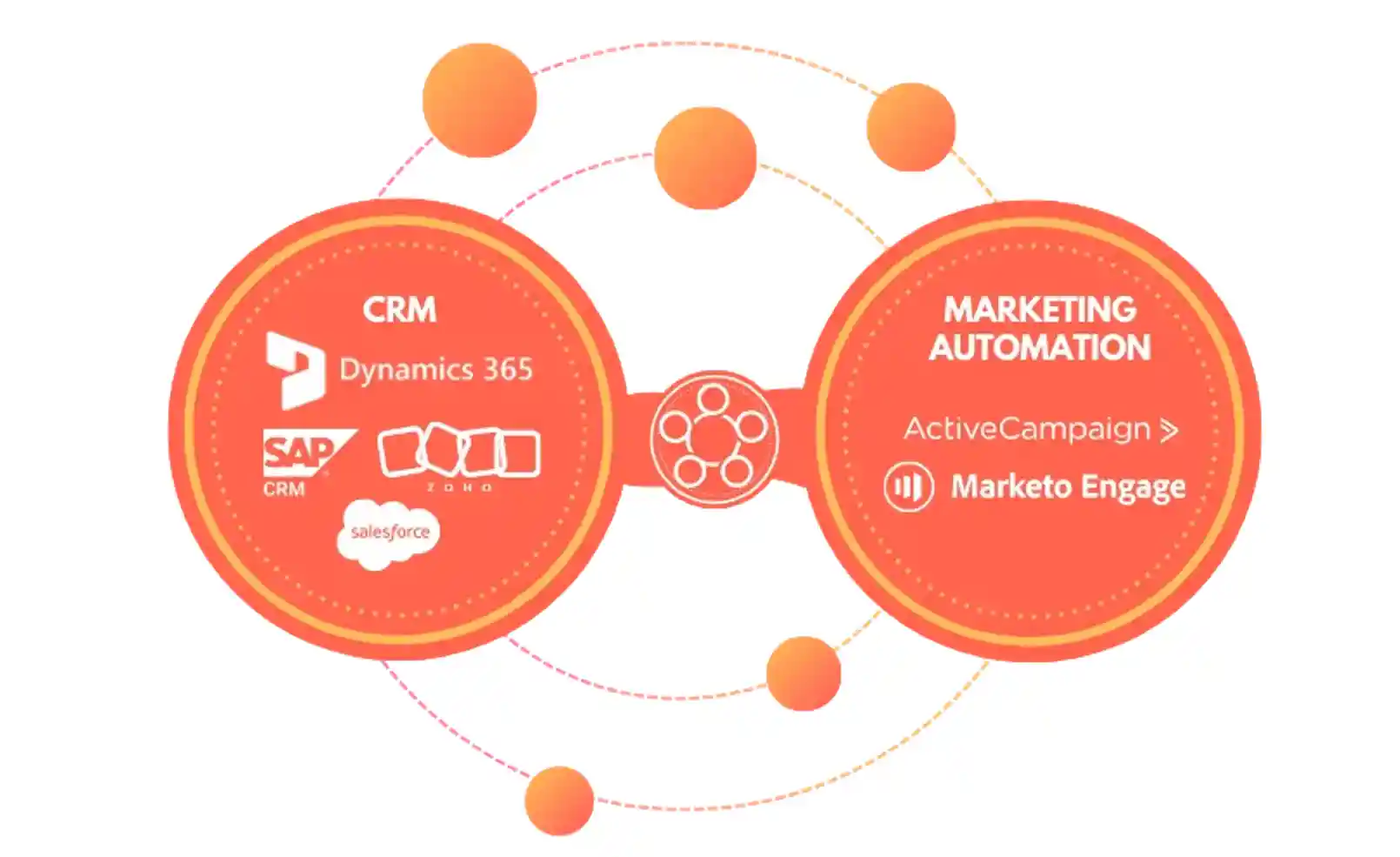
Let’s face it—marketing and sales teams don’t always play nicely together. Marketing says, “We gave you leads!” Sales says, “Yeah, but they’re not qualified!” And the cycle continues like a never-ending soap opera. But what if you could make them work together seamlessly, like peanut butter and jelly, Batman and Robin, or coffee and Monday mornings?
That’s where CRM integration with marketing automation comes in. It’s the secret sauce that aligns your sales and marketing teams, eliminates silos, and makes your entire business run like a well-oiled machine.
In this article, we’ll break down what CRM and marketing automation integration really means, why it’s so powerful, how it works, and how it can skyrocket your business growth. So, buckle up—this is about to get exciting (and surprisingly practical).
What Is CRM Integration with Marketing Automation?
CRM (Customer Relationship Management) and marketing automation tools serve different purposes—but when you connect them, the magic happens.
A CRM system stores all your customer and prospect data: names, emails, purchase history, communication logs, and so on. Think of it as your business’s digital Rolodex on steroids.
On the other hand, marketing automation software manages and automates your marketing campaigns—like sending targeted emails, scoring leads, nurturing prospects, and tracking engagement.
When you integrate CRM with marketing automation, you connect these two systems so that data flows freely between them. This means every lead generated by marketing automatically appears in your CRM, complete with all their activity history—clicks, downloads, email opens, website visits, and more.
The result? Your sales team knows exactly who’s interested and how engaged they are, while your marketing team can fine-tune campaigns based on real sales data.
Why CRM and Marketing Automation Are Better Together
1. No More Miscommunication Between Teams
Sales blames marketing for bad leads. Marketing blames sales for not following up. Sound familiar? Integrating CRM with marketing automation fixes that.
Now both teams have access to the same data, in real time. Marketing can see which campaigns actually convert to revenue, and sales can see how each lead interacted with your brand before reaching out. Everyone wins.
2. Smarter Lead Scoring and Qualification
Without integration, lead scoring can feel like throwing darts blindfolded. But with CRM and marketing automation working together, you can score leads based on both marketing engagement (like clicking emails or downloading eBooks) and sales activity (like attending a demo or replying to a proposal).
This creates a complete picture of each lead’s readiness to buy—so sales only focuses on the hot prospects, while marketing nurtures the rest.
3. Personalized and Timely Communication
Customers hate generic messages. Integration lets you personalize marketing at scale.
For example:
- A lead visits your pricing page? The marketing automation tool can trigger a personalized follow-up email.
- A customer hasn’t purchased in three months? The CRM sends their data to marketing for a win-back campaign.
It’s automation with a human touch—personal, timely, and data-driven.
4. Better Data, Better Decisions
When your CRM and marketing automation platforms talk to each other, your data becomes a goldmine. You can track which campaigns bring in the most revenue, which sales tactics close the most deals, and where customers drop off in the funnel.
No more guessing. Just actionable insights.
Here’s what that looks like in action:
| Metric | Before Integration | After Integration |
|---|---|---|
| Lead follow-up time | 2–3 days | Within hours |
| Lead conversion rate | 10% | 25–40% |
| Customer retention rate | 60% | 80%+ |
| Marketing ROI tracking | Limited | Fully measurable |
5. Enhanced Customer Experience
Today’s customers expect seamless interactions. If your sales and marketing systems aren’t connected, customers might get repetitive emails or irrelevant offers. Integration ensures every touchpoint feels coordinated and intentional—like you actually know them (because now, you do).
How CRM Integration with Marketing Automation Works
The process is pretty straightforward once you break it down:
- Data Sync:
All contact and lead information syncs between your CRM and marketing automation tool—names, emails, job titles, phone numbers, etc. - Lead Tracking:
Marketing automation tracks how leads engage with your content (website visits, emails, social media, etc.) and updates that data in your CRM. - Lead Scoring & Nurturing:
Leads are automatically scored and categorized based on behavior. Once they reach a certain score, they’re sent to sales for follow-up. - Sales Feedback Loop:
Sales updates the CRM with lead outcomes (won, lost, in progress). That info goes back to marketing, helping refine future campaigns. - Continuous Optimization:
Both teams use shared insights to improve strategies, messaging, and targeting.
It’s an ongoing cycle of improvement—like a feedback loop that keeps getting smarter.
Popular CRM and Marketing Automation Integrations
Here are some of the most common pairings businesses use:
| CRM | Marketing Automation Tool | Integration Benefit |
|---|---|---|
| Salesforce | HubSpot, Marketo, Pardot | Real-time lead syncing, advanced analytics |
| HubSpot CRM | HubSpot Marketing Hub | All-in-one ecosystem, easy automation |
| Zoho CRM | Zoho Marketing Automation, Mailchimp | Cost-effective, scalable, and user-friendly |
| Pipedrive | ActiveCampaign | Great for SMBs with automated workflows |
| Microsoft Dynamics 365 | ClickDimensions | Perfect for enterprises using Microsoft stack |
Most modern CRM systems offer built-in or third-party integrations that make setup surprisingly painless.
Benefits by Business Size
For Small Businesses
- Automate repetitive marketing and follow-ups
- Track customer interactions without manual updates
- Spend less time managing tools and more time selling
For Mid-Size Companies
- Align marketing and sales processes
- Improve lead quality and tracking
- Access analytics that drive smarter growth decisions
For Large Enterprises
- Manage massive data sets efficiently
- Enable cross-department collaboration
- Personalize campaigns at scale with AI insights
Real-World Example: Turning Data into Dollars
Imagine a mid-size eCommerce brand that sells eco-friendly products. Before integrating CRM and marketing automation:
- Marketing sends thousands of emails but doesn’t know who’s actually buying.
- Sales has incomplete customer data.
- Follow-ups are inconsistent.
After integration:
- Leads from email campaigns automatically flow into the CRM.
- Marketing sees which campaigns lead to purchases.
- Sales gets instant alerts when a hot lead takes action.
- Personalized upsell campaigns increase repeat purchases by 35%.
In short: integration transforms scattered data into coordinated action—and more revenue.
Challenges of CRM-Marketing Integration
Like any powerful system, integration isn’t always plug-and-play. Common challenges include:
- Data duplication: when multiple systems have overlapping contacts.
- Inconsistent formatting: mismatched fields between platforms.
- User adoption: teams need proper training to make full use of the tools.
- Cost considerations: depending on the tools, setup and maintenance may add up.
The good news? These challenges are easily overcome with a clear integration plan, good data hygiene, and training. Once you’re set up, the benefits far outweigh the effort.
Final Thoughts: Why This Integration is a Game-Changer
Integrating your CRM with marketing automation isn’t just about syncing data—it’s about syncing strategy. It bridges the gap between marketing creativity and sales execution, making your entire organization more agile, efficient, and customer-focused.
The end result?
- Shorter sales cycles
- More qualified leads
- Happier customers
- And a much healthier bottom line
So if your sales and marketing teams are still working in silos, it’s time to connect the dots. Because when your CRM and marketing automation tools work together, business doesn’t just grow—it thrives.
Frequently Asked Questions
1. What’s the main purpose of integrating CRM with marketing automation?
To align marketing and sales efforts, improve lead management, and provide a seamless customer experience through shared, real-time data.
2. Which businesses should consider this integration?
Any business that wants to improve lead quality, boost conversion rates, and streamline communication between marketing and sales teams.
3. Is CRM and marketing automation integration expensive?
It depends on the tools you use. Many CRMs (like HubSpot or Zoho) offer built-in automation features at affordable tiers, while enterprise solutions like Salesforce may cost more but offer deeper functionality.
4. Can this integration work with existing systems?
Yes, most modern CRM and marketing platforms have APIs or connectors that make integration seamless with minimal IT involvement.
5. What results can I expect after integration?
Expect faster lead response times, higher conversion rates, better campaign ROI tracking, and stronger collaboration across teams.