Let’s be honest—running a small business today feels like juggling flaming swords while balancing on a unicycle. You’ve got leads to track, customers to follow up with, invoices to send, and somehow you’re supposed to keep your team aligned through all of it.
That’s where CRM systems come into play.
But here’s the million-dollar question (or at least the few-hundred-dollar-per-month question): Is NetSuite CRM worth it for small businesses?
If you’ve been poking around the CRM world, you’ve probably heard NetSuite’s name tossed around alongside giants like Salesforce, HubSpot, or Zoho. It’s powerful, integrated, and… well, a little intimidating if you’re not an enterprise with a dedicated IT department.
Still, many small businesses are curious: can NetSuite actually be a good fit, or is it like buying a spaceship when all you need is a scooter?
In this article, we’ll dive into what makes NetSuite CRM special, how it compares to other systems, and whether it’s truly worth the investment for small business owners like you.
What Exactly Is NetSuite CRM?
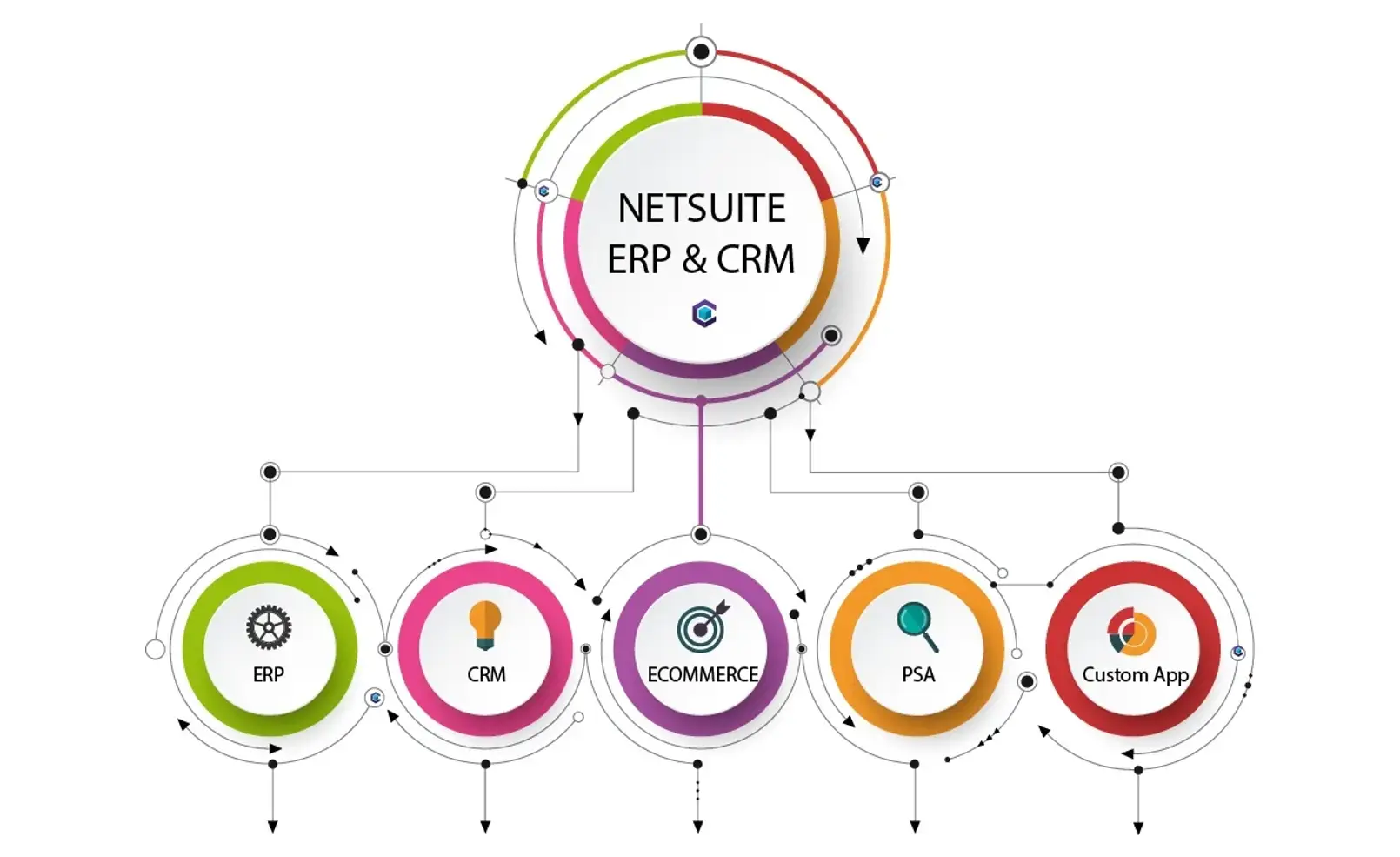
NetSuite CRM (Customer Relationship Management) is part of Oracle’s NetSuite cloud platform—basically an all-in-one suite that handles everything from sales and marketing to finance, inventory, and eCommerce.
It’s like a Swiss Army knife for business software, except with fewer tools for cutting and more tools for calculating profit margins.
While some CRMs focus just on sales pipelines or contact management, NetSuite CRM connects customer data to the entire business ecosystem.
That means your sales team can see invoice history, your finance department can track renewals, and your customer support team can access the same unified customer record—all in one system.
In short: it’s big, it’s integrated, and it’s built for serious business operations.
Why Small Businesses Are Considering NetSuite CRM
You might think NetSuite is just for big corporations with skyscrapers and golf memberships, but the truth is many small and midsize businesses (SMBs) are starting to look at it seriously. Why? Because small companies are getting more sophisticated.
They’re selling online, managing remote teams, and scaling faster than ever before. With all that growth comes complexity—and spreadsheets can only take you so far.
Here’s what attracts small businesses to NetSuite CRM:
- All-in-one system: No need to patch together five different tools for sales, inventory, accounting, and support.
- Scalability: You won’t outgrow it anytime soon.
- Real-time insights: Everything’s connected, so you get instant updates on sales, forecasts, and performance.
- Automation: Less manual work, more time for actual selling.
Of course, the flip side is that all these perks come with a learning curve and a price tag to match.
Key Features of NetSuite CRM
Let’s unpack what makes this platform so powerful (and why some users absolutely love it).
1. Sales Force Automation
NetSuite automates lead-to-cash processes—meaning you can manage leads, opportunities, quotes, and orders without losing track of where things stand.
It even handles sales forecasts and commissions, so you can finally stop guessing what your pipeline looks like.
2. Marketing Automation
You can create, execute, and measure campaigns directly within NetSuite. It integrates marketing activities with sales data, so your campaigns are not shooting in the dark.
Imagine sending follow-up emails automatically after a lead interacts with your website or closes a deal—without lifting a finger.
3. Customer Service Management
NetSuite CRM includes built-in customer support tools, such as case management and self-service portals.
This ensures that customer issues don’t slip through the cracks (and your support team doesn’t lose their minds trying to find information).
4. Partner Relationship Management
If your business works with distributors or affiliates, this feature helps you manage those relationships efficiently. It tracks partner performance, incentives, and opportunities.
5. Mobile Access
Because the world doesn’t stop when you leave the office, NetSuite’s mobile app lets you access CRM data on the go—check leads, update deals, or view customer history right from your phone.
6. Integration With ERP
This is where NetSuite truly shines. Since it’s part of Oracle’s full ERP suite, it integrates seamlessly with accounting, inventory, and HR systems. For businesses that want one unified view of everything, this is a game-changer.
Pros and Cons of NetSuite CRM for Small Businesses
Here’s a quick overview of what you’re getting into:
| Pros | Cons |
|---|---|
| Highly integrated with ERP | Steeper learning curve |
| Scalable for growing businesses | Expensive compared to other CRMs |
| Excellent automation and analytics | Setup can be complex |
| Real-time visibility across departments | Requires customization for best results |
| Cloud-based and mobile-friendly | May be overkill for very small teams |
Pricing: The Elephant in the Room
Alright, let’s talk money—because that’s often where decisions get real
NetSuite doesn’t have transparent pricing on its website (classic enterprise move). However, based on various reports and user reviews, you can expect to pay somewhere between $99 to $199 per user per month, plus setup fees that can reach several thousand dollars depending on customization.
For comparison:
- HubSpot CRM starts free.
- Zoho CRM starts around $20/user/month.
- Salesforce Essentials runs about $25/user/month.
So yes, NetSuite is a significant investment. But before you rule it out, remember that you’re not just paying for a CRM—you’re paying for an entire ecosystem that can replace multiple other systems.
When NetSuite CRM Is Worth It
NetSuite CRM makes perfect sense if:
- You’re running a growing small business with complex operations (multiple departments, inventory, accounting, etc.)
- You want a system that scales without switching platforms later
- You’re tired of using different apps that don’t talk to each other
- You have the budget (and patience) for proper implementation and training
For example, a small manufacturing company or an online retailer with a large catalog can benefit enormously from the integration between CRM, ERP, and eCommerce modules.
When It’s Not Worth It
On the other hand, if you’re a solopreneur or a small team that just needs to manage leads and track deals, NetSuite might be like using a chainsaw to cut a cupcake.
In that case, you might be better off with lighter, cheaper options such as:
- HubSpot CRM (great for simplicity and automation)
- Pipedrive (excellent for visual sales tracking)
- Zoho CRM (affordable and flexible for small teams)
NetSuite CRM vs. Other Popular CRMs
Let’s look at how NetSuite stacks up against some popular alternatives:
| Feature | NetSuite CRM | HubSpot CRM | Zoho CRM | Salesforce |
|---|---|---|---|---|
| Ease of Use | Moderate | Very Easy | Easy | Moderate |
| Integration | Excellent (ERP-level) | Good | Good | Excellent |
| Automation | Advanced | Moderate | Advanced | Advanced |
| Pricing | $$$ | Free–$$ | $ | $$$ |
| Scalability | High | Medium | Medium | High |
| Best For | Growing SMBs or mid-sized companies | Startups & marketing teams | Budget-conscious small businesses | Larger sales teams |
The Learning Curve Factor
Be warned: NetSuite is not plug-and-play. Unlike some CRMs that you can set up in an afternoon, NetSuite may take weeks (or months) to fully customize and train your team on.
That said, Oracle offers excellent documentation, onboarding support, and a strong community. Once it’s running smoothly, you’ll appreciate how deeply it connects every part of your business.
The Verdict: Is NetSuite CRM Worth It for Small Businesses?
So, back to our original question—is it worth it?
If your small business is growing fast, needs advanced automation, and wants to run everything under one digital roof, then yes, NetSuite CRM can absolutely be worth it. It’s like hiring a digital operations manager that never sleeps.
However, if your team is small, your processes are simple, or your budget is tight, you might find the system too heavy (and pricey) for what you actually need. In that case, consider starting with a lighter CRM and upgrading later when you outgrow it.
Ultimately, it’s all about fit—not just features.
Conclusion
NetSuite CRM is a powerhouse that brings enterprise-level tools into the hands of growing businesses. It’s not cheap or effortless, but it offers unmatched integration and scalability. For small businesses ready to level up and streamline every corner of their operation, it can be an incredibly smart investment.
But if you’re just dipping your toes into CRM waters, starting smaller might make more sense. Think of NetSuite as the “final form” of your CRM journey—the system you graduate to when your business starts expanding faster than your spreadsheets can handle.
Choose wisely, because the right CRM can make your business smoother, smarter, and yes—maybe even a little more fun to run.
Frequently Asked Questions (FAQ)
1. Is NetSuite CRM suitable for very small businesses (under 10 employees)?
Not really. It’s more ideal for small to midsize businesses with complex operations or multiple departments.
2. How long does it take to implement NetSuite CRM?
Depending on customization, it can take anywhere from a few weeks to several months.
3. Can I use NetSuite CRM without the ERP modules?
Yes, you can use it as a standalone CRM, though it’s most powerful when integrated with other NetSuite modules.
4. Does NetSuite offer a free trial?
Not officially. You usually need to contact Oracle or a partner for a demo.
5. Is NetSuite CRM better than Salesforce?
It depends. NetSuite offers stronger ERP integration, while Salesforce excels in CRM flexibility and app ecosystem.
6. What industries benefit most from NetSuite CRM?
Manufacturing, retail, wholesale distribution, and service-based businesses that require tight coordination between departments.
7. Can NetSuite CRM integrate with third-party tools like Shopify or Gmail?
Yes, through APIs and connectors, though setup might require developer assistance.